


Bitcoin is trading at $76.2K, while the average cost basis of coins aged up to six months is $71.3K. Over the past week, the gap between price and cost basis has narrowed, while the exchange inflow P/L indicator has approached zero.
TL;DR
The profit cushion for holders of younger coins is shrinking. We examine changes in exchange inflows and the cost-basis level whose loss would put more pressure on this group.
Bitcoin STH Profit/Loss to Exchanges
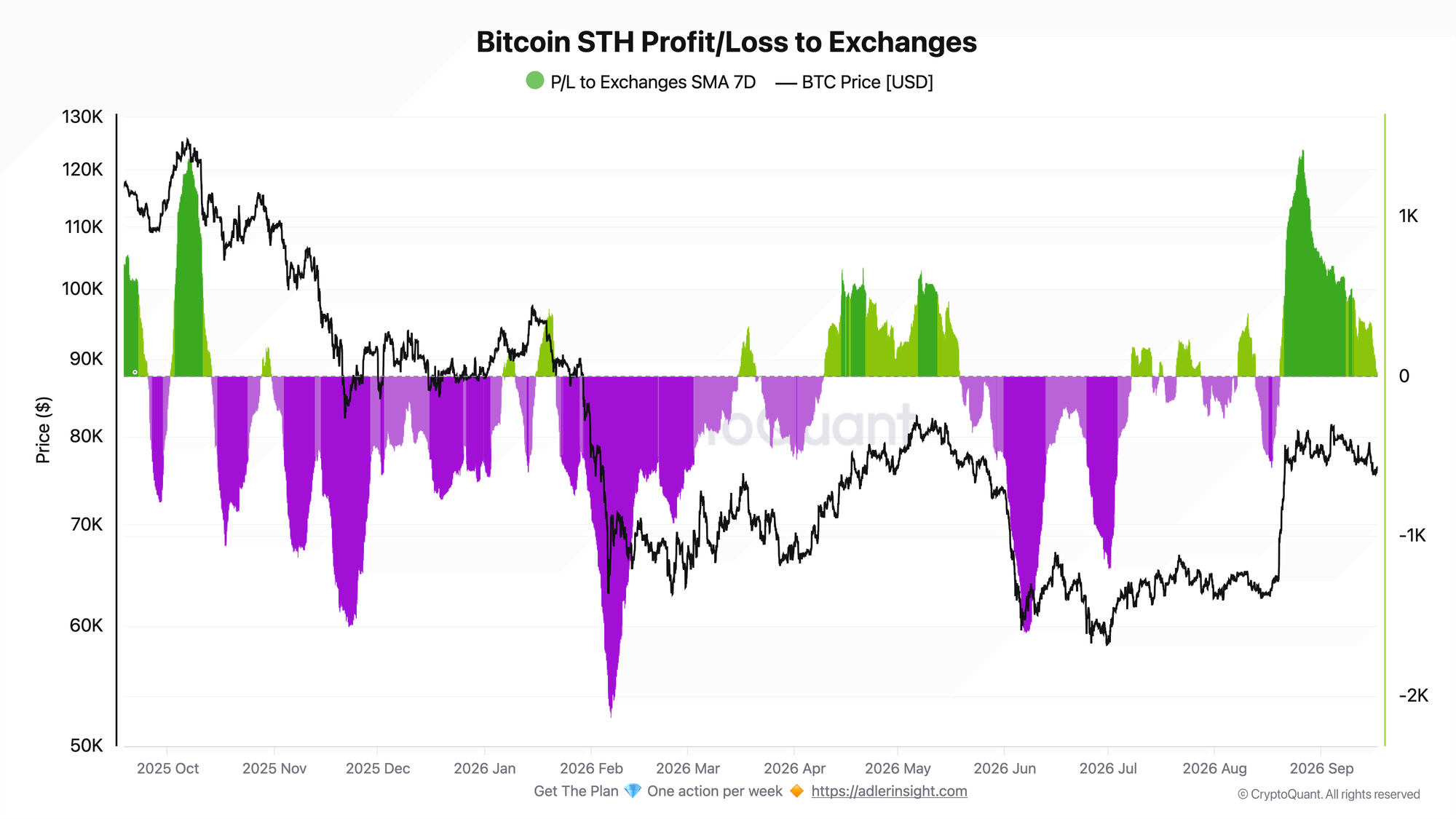
From September 10 to 17, the metric’s average value fell by roughly 96% and approached zero. The dominance of profit-taking over loss-taking has nearly disappeared. This does not mean holders have stopped sending coins to exchanges: transfers at a loss are now offsetting more of the transfers at a profit.
If the indicator stays below zero, the balance will shift toward loss-taking. This would signal growing stress among short-term holders.
Bitcoin STH Cost-Basis Multiples
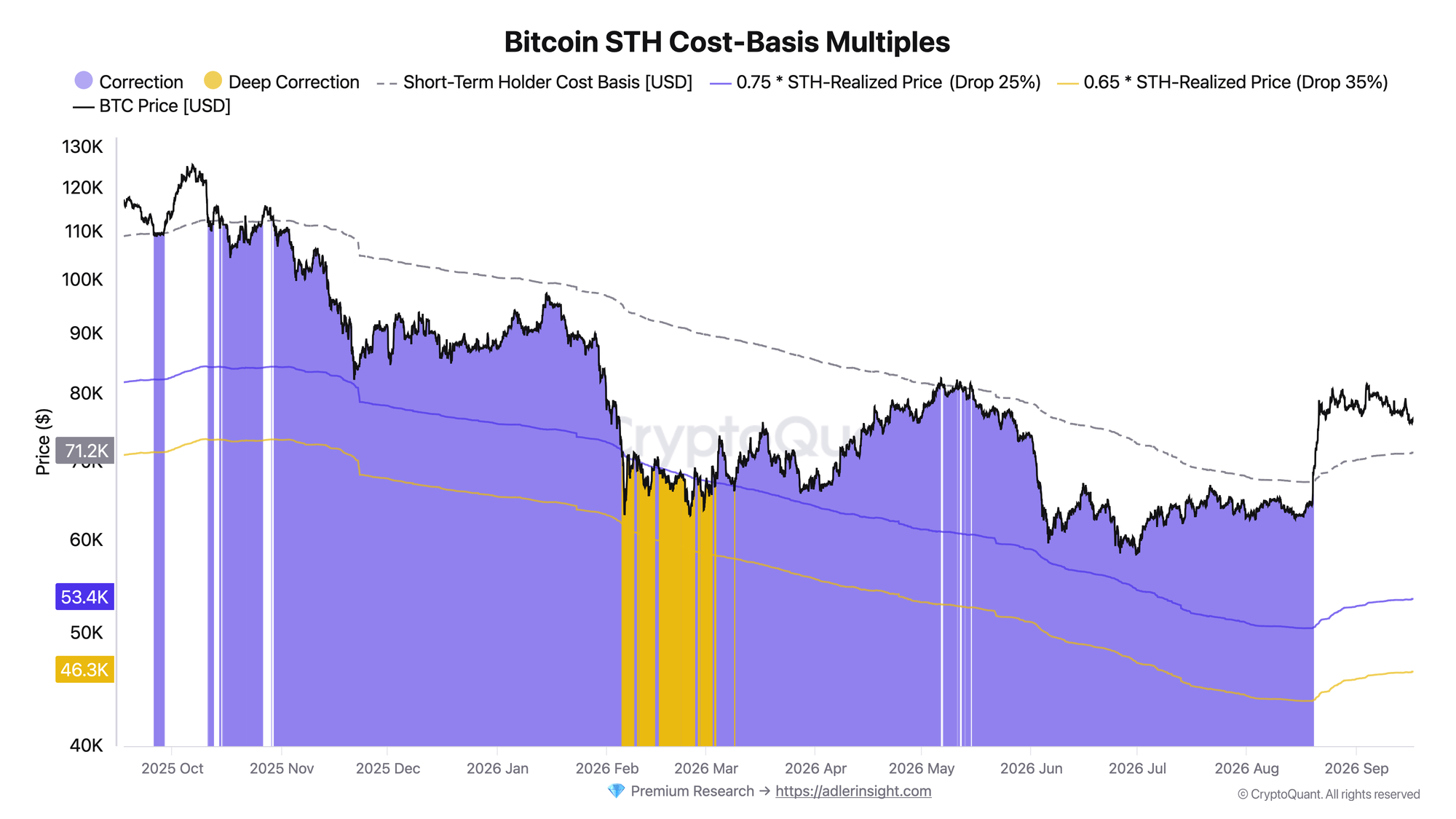
As of September 17, Bitcoin is trading at $76.2K, while the average purchase price for short-term holders is $71.3K. Their profit cushion has narrowed from 10% to 7% over the past week: Bitcoin’s price fell, while their average purchase price rose slightly.
If Bitcoin falls below $71.3K, this group will be underwater. If the exchange inflow indicator also turns negative, it would point to increased loss-taking. Together, these signals would indicate growing pressure on short-term holders.
The market is near a bottom - the best entry comes once per cycle. One step a week, clear triggers, and invalidation levels. Join Weekly Engine.
FAQ
Does an indicator near zero mean coins have stopped flowing into exchanges? No. Coins are still flowing in, but transfers at a profit and at a loss are nearly balancing each other out.
If Bitcoin is above the average purchase price, are all short-term holders in profit? No. Those who bought above the current price are already underwater. The average purchase price does not reflect each holder’s individual return.
Conclusions
Bitcoin remains above the average purchase price for short-term holders, but their profit cushion is shrinking. Renewed price gains would improve their position. The main risk is a drop below $71.3K alongside the exchange inflow indicator turning negative. This would mean the group is underwater on average, with transfers to exchanges at a loss outweighing those at a profit.
Live Charts
Explore the metrics behind this brief with live, auto-updating charts:
STH-SOPR - Short-term holder profit/loss behavior around the 1.0 breakeven threshold.
Supply in Loss - Share of supply held at a loss to flag stress and capitulation zones.
Exchange Netflow - Net BTC moving to and from exchanges across positive and negative flow regimes.
Supply in Profit - Share of circulating supply in profit as a cycle-phase and euphoria gauge.
Holder Behavior - All holder profitability and supply-cohort charts in one view.