


🎧 Morning Brief #173 - audio debate on today’s market setup
Bitcoin Impulse moved into negative territory for the first time since early April, while the yield on 30-year US Treasuries rose to a new high of 5.20%. This describes the current regime well: the conditions for a sustained risk rally in the market are not there.
TL;DR
Bitcoin's slow impulse moved into negative territory at the same time as the 30-year UST yield broke out to new highs. Until Slow Impulse returns to positive territory, the market structure has shifted: impulse is now working against the bulls.
Bitcoin Impulse Performance: Fast & Slow Components
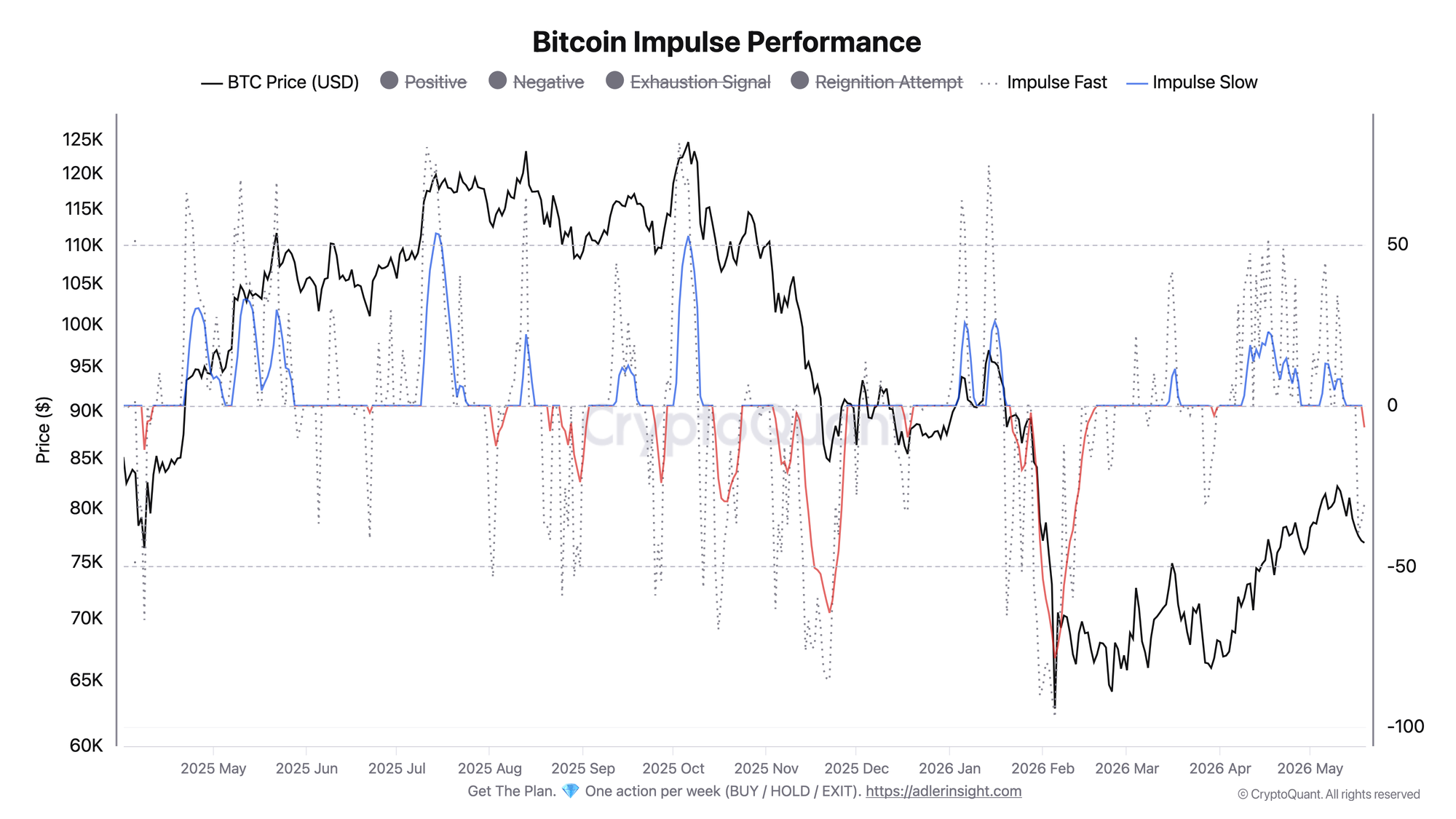
The indicator tracks two components of Bitcoin momentum: Fast (short-term) and Slow (structural). On the latest candle, Impulse Fast moved to -30.57, while Impulse Slow fell to -6.76, entering negative territory for the first time since early April. Back on May 10-11, Fast was printing values in the +21-34 range, while Slow was holding above zero. At the time, it looked like a continuation of impulse. However, over the course of the week, both components steadily degraded to their current negative values.
The move in Slow below zero is a structural signal. Short Fast spikes without Slow holding in positive territory look like false restart attempts, not the start or continuation of a bullish regime. Confirmation of renewed upside impulse would require Slow to return above zero while Fast is also positive.
US 30-Year Treasury Bond Yield
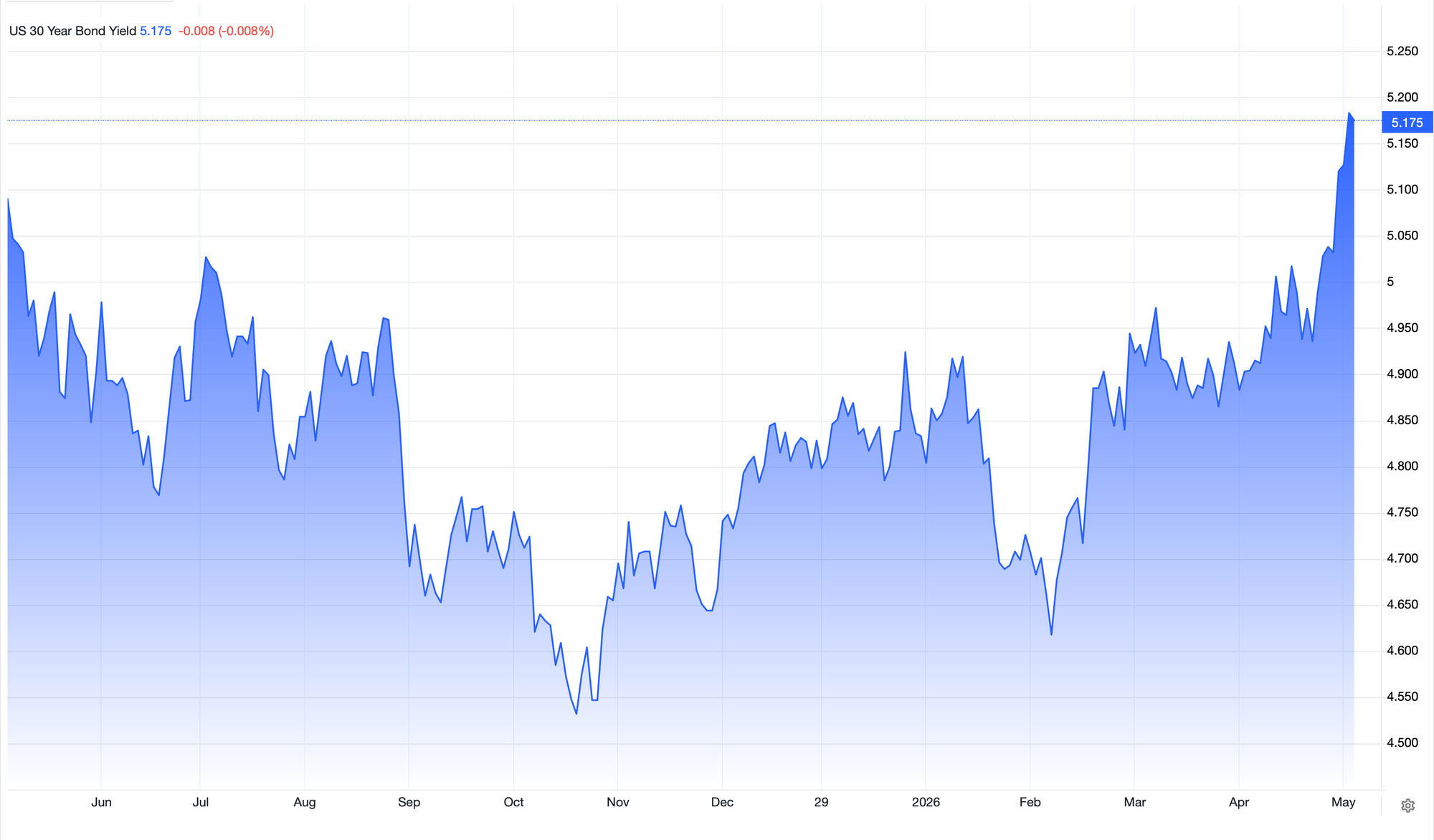
The 30-year Treasury yield reached 5.20%, exceeding the previous local peak from early 2025. The move looks impulsive: over the past few weeks, the yield has risen from the 4.80% area to current levels without a meaningful pullback. This points to sustained pressure on the yield curve.
The rise in 30-year Treasuries increases the cost of duration and worsens the backdrop for risk assets. The higher the yield on risk-free instruments, the weaker the relative appeal of high-volatility assets. For Bitcoin, this creates a restrictive context: the level above 5% becomes an important psychological and technical barrier, and sustained holding above it could intensify pressure on risk.
The link between the two charts: the deterioration in the macro backdrop has synchronized with the degradation of Bitcoin's impulse. This is part of a broader regime in which risk appetite is declining, as growing concerns over an inflation shock driven by the energy crisis fuel expectations that the Federal Reserve may raise interest rates.
Invest in Bitcoin without emotional decisions - Start free. Deterministic signals built to remove fear, FOMO, and panic selling.
FAQ
What does Impulse Slow moving into negative territory mean?
The slow impulse component reflects structural momentum, not short-term fluctuations. Its move below zero means the market has lost its accumulated bullish inertia: even if price is holding, the internal dynamics have weakened. A sustainable bullish regime requires both Fast and Slow to be positive at the same time.
Under what condition does the signal turn positive?
The key trigger is a return of Impulse Slow above zero, with Fast also in positive territory. On the macro front, it is important to watch for the 30-year Treasury yield stabilizing below 5%. This would reduce pressure on liquidity and create a more favorable backdrop for a recovery in risk appetite.
CONCLUSIONS
Both signals today point in the same direction: Bitcoin Impulse moved into negative territory for the first time in several weeks, while the 30-year UST yield broke out to new highs, tightening conditions for risk assets. The regime remains risk-off: Bitcoin's current price levels are not supported by impulse movement, while the macro backdrop is working against it.
The main improvement trigger is Bitcoin Impulse Slow returning to positive territory. The main risk is a deterioration in the macro backdrop and a continued rise in yields, which could intensify pressure on risk assets and lead to a retest of Bitcoin's lower price ranges.
Further Reading