


Bitcoin has risen from $59K to $84K. Over the past 30 days, transaction fees generated an average of just 64 cents out of every $100 in daily miner revenue. All remaining revenue came from newly issued BTC, so rising bitcoin prices remain the main driver of improving conditions for miners.
TL;DR
Fees account for a small share of miner revenue, so miners' financial health depends largely on bitcoin's price and equipment efficiency. We examine which models maintain a cushion between the price of BTC and electricity costs.
Bitcoin Miner Fee Revenue Share
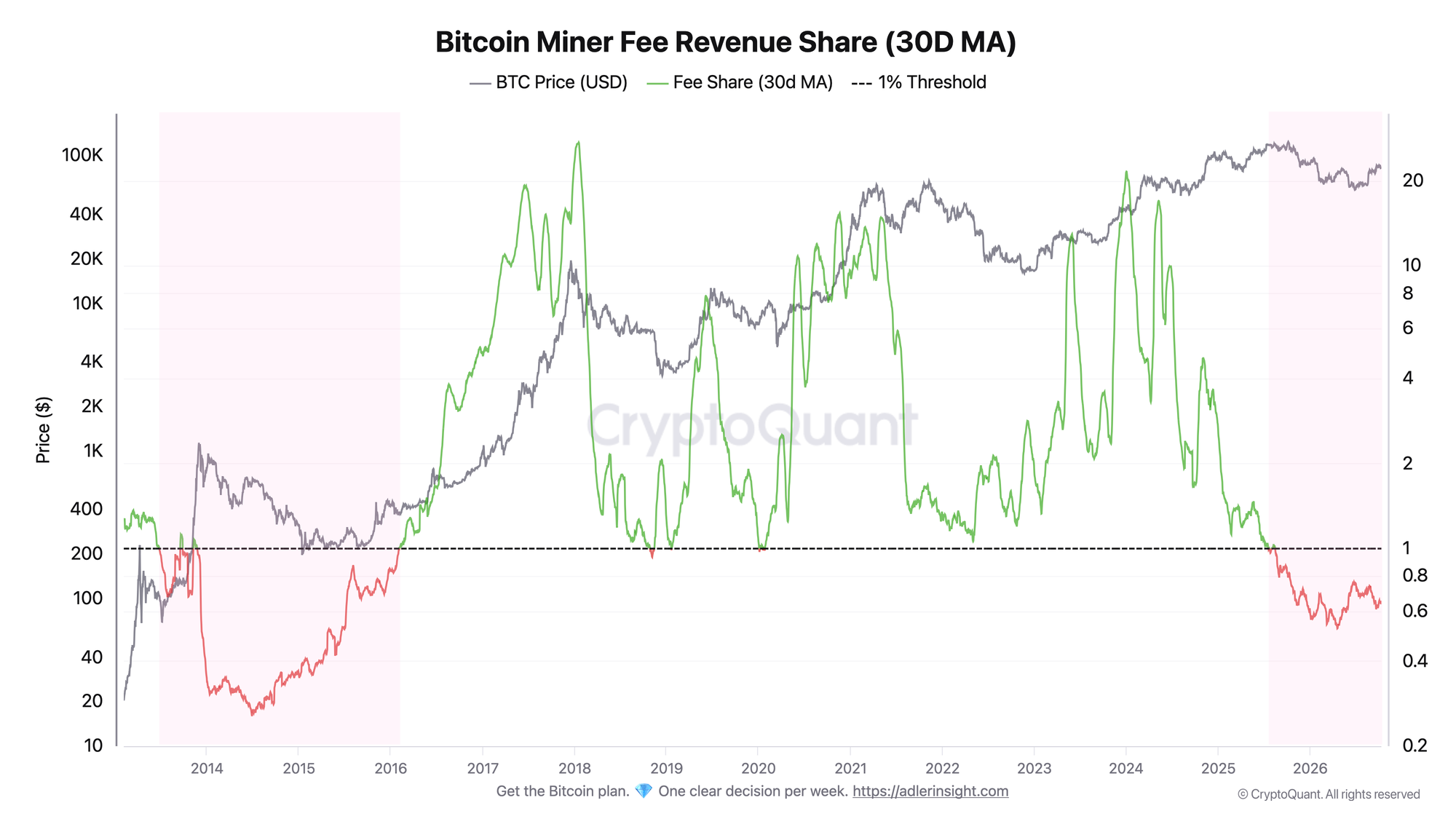
The average fee share over the past 30 days is 0.64%, compared with 0.65% a week earlier. The change is small, but the indicator has remained below 1% since mid-August 2025. Rewards for issuing new coins still provide almost all miner revenue, while fees do little to improve profitability.
Watch for a sustained increase in the fee share. A move back above 1% would show that fees are contributing more to miner revenue and reflect greater network activity.
Estimated Electricity Production Cost per BTC
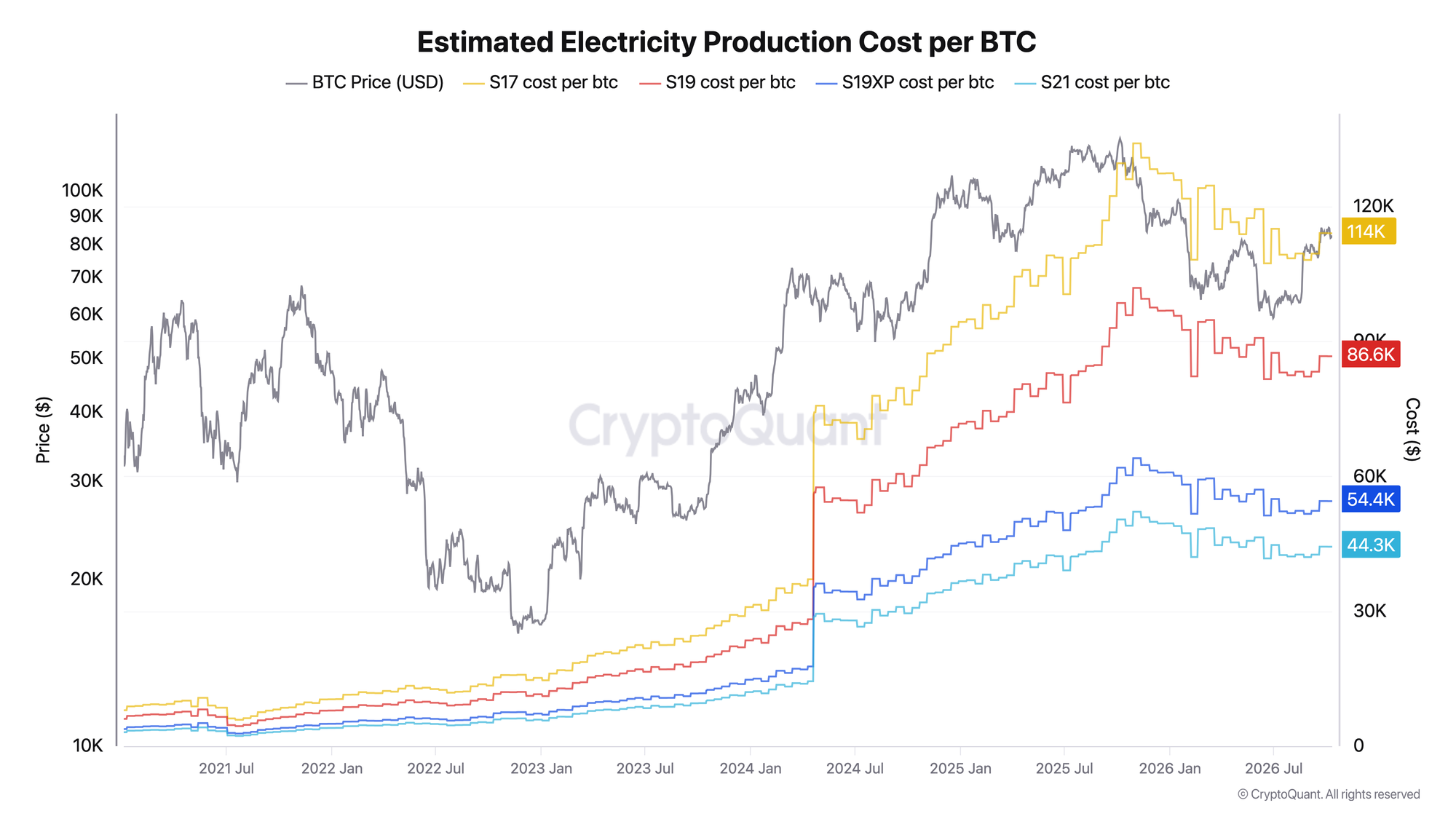
At an electricity rate of $0.05/kWh, mining one BTC with a Bitmain Antminer S19 costs $86.7K in electricity alone. Even after the price recovery, those costs exceed the market value of the mined coin. With an S21, electricity costs $44.3K per BTC, leaving more money to cover equipment, maintenance, and other expenses.
Bitcoin's rise has improved conditions for miners, but older equipment remains difficult to run profitably at this electricity rate. If the price continues to rise, the shortfall for the S19 will narrow, while the cushion for the S21 will grow.
Protect capital first. Capture upside second. Built for long-term investors who want performance, not stress. Get access.
FAQ
Is this the full cost of mining bitcoin? No. The calculation includes only electricity at the specified rate. Equipment purchases, cooling infrastructure, repairs, and other expenses increase the total cost.
Does a fee share below 1% mean miners are capitulating? No. It shows that fees contribute little to revenue, but it does not confirm equipment shutdowns or sales of reserves. Each miner's financial health depends on its equipment, electricity rate, and other expenses.
Conclusions
Bitcoin's rise from $59K to $82K has improved conditions for miners, but at an electricity rate of $0.05/kWh, Bitmain Antminer S19 operators still spend more on electricity than the mined BTC is worth. These costs are much lower for the Bitmain Antminer S21, leaving more money for equipment and maintenance. Further price gains or lower costs would improve the economics of both models, while a decline in bitcoin would reduce their revenue. Network fees still contribute too little to offset the losses.
Live Charts
Explore the metrics behind this brief with live, auto-updating charts:
Puell Multiple - Miner revenue stress and expansion relative to the 365-day average.
Realized Price - Aggregate on-chain cost basis compared with BTC price and long-term trend.
Bitcoin Price Forecast - Power Law model for long-term Bitcoin price bands and forecast targets.
Bitcoin Analysis Framework - Multi-layer decision stack for cycle position, participant behavior, and momentum timing.