


Bitcoin is trading 15% above the average cost basis of coins held by short-term holders. For seven weeks, this group's holdings have remained above their month-earlier levels, while its average cost basis has risen along with the market.
TL;DR
Short-term holders are in profit on average, and their holdings continue to grow. We examine how resilient their position is and which level needs to hold.
Bitcoin Short-Term Holders 30-Day Position Changes
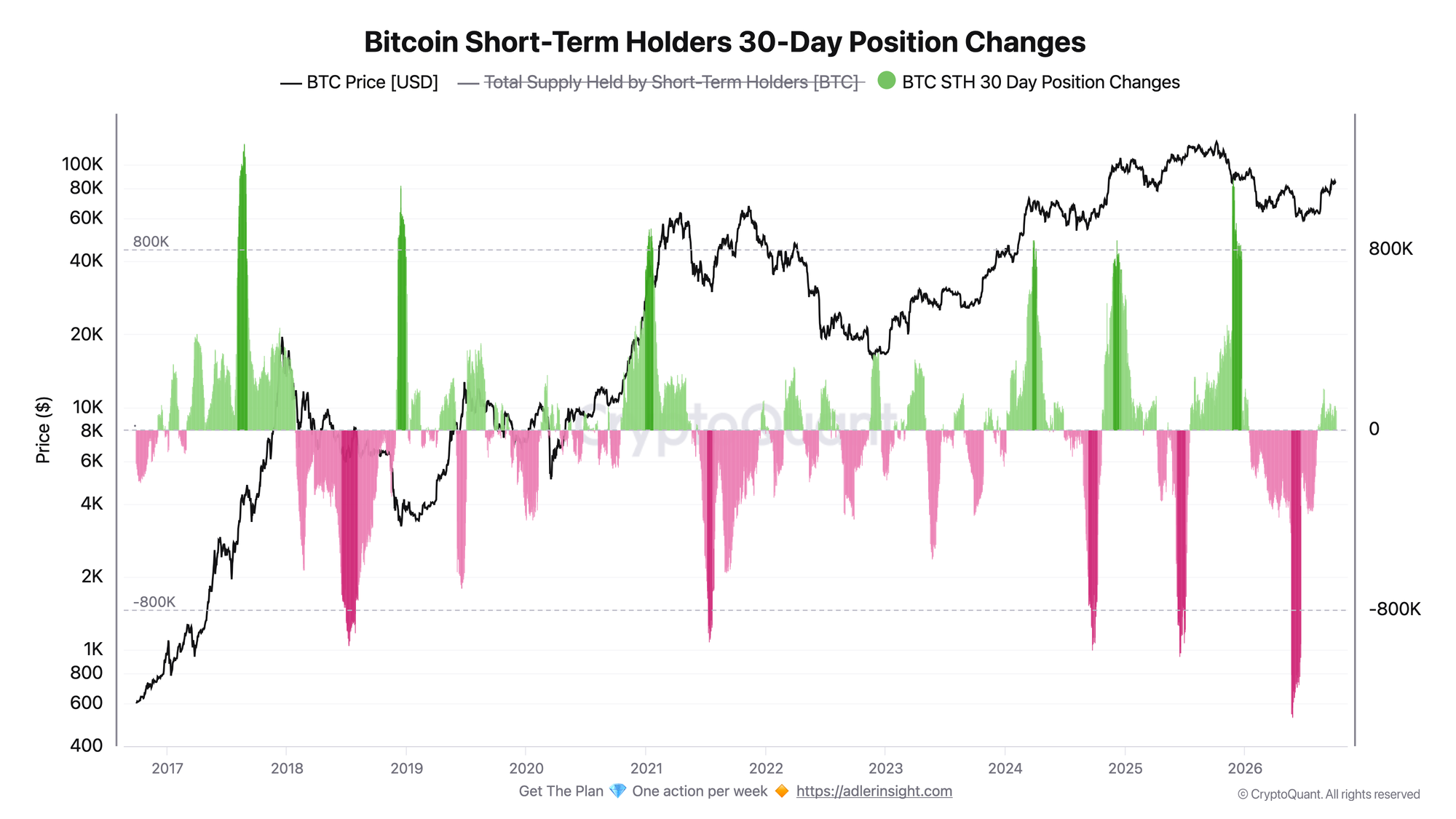
As of October 4, short-term holder supply had increased by 87,000 BTC over 30 days to 3.94 million BTC. A week earlier, the increase was just 15,000 BTC, and the indicator has remained above zero since August 18. This is a clear reversal from May, when this group's holdings fell by nearly 1.28 million BTC over 30 days. That was the steepest decline in the data going back to 2016.
The increase means that the supply of coins moved within the past six months is growing. If the indicator falls below zero, the group will begin shrinking again: coins entering the group will no longer offset those leaving it, including those aging out.
Bitcoin Short-Term Holders MVRV
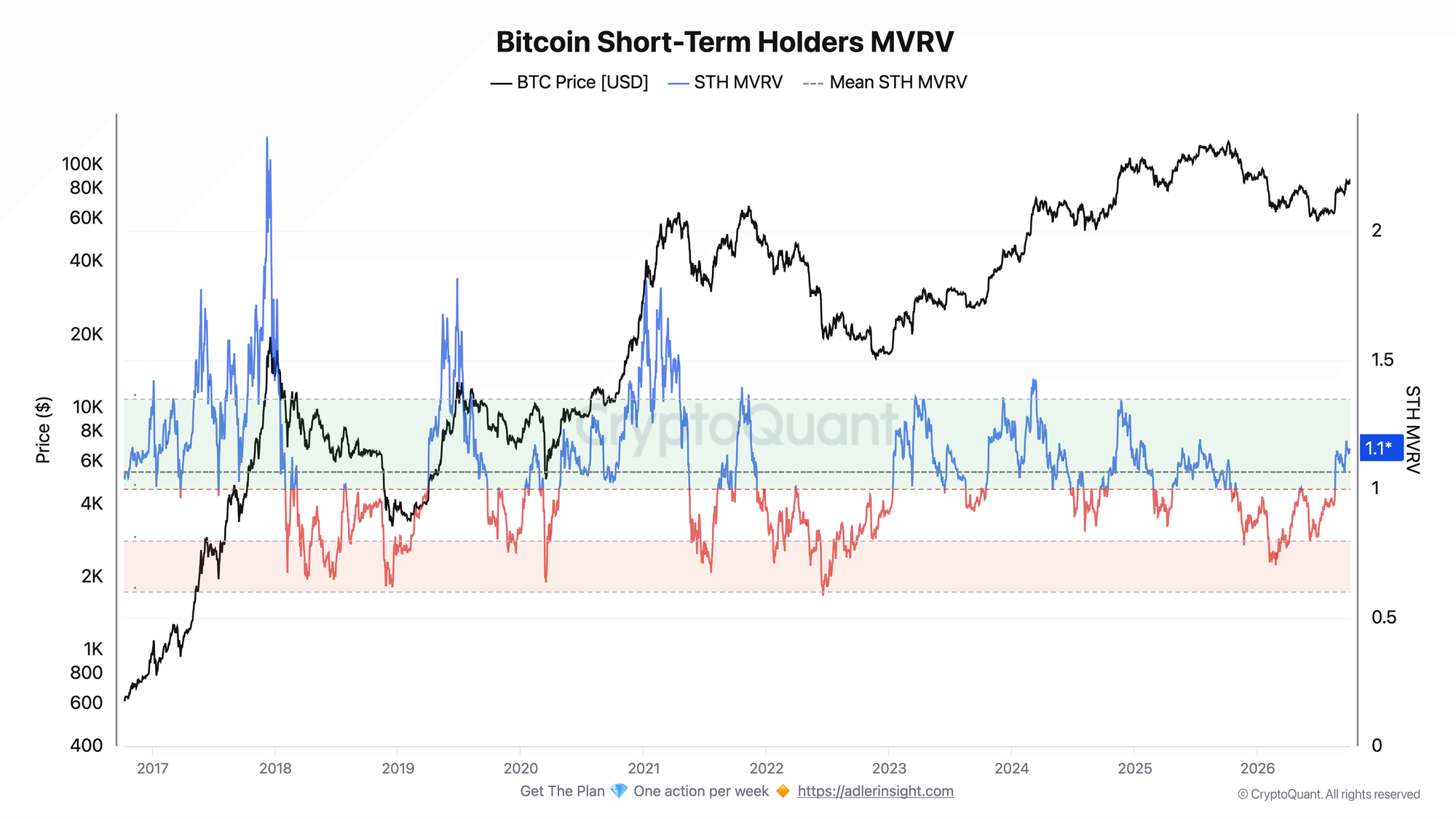
As of October 4, bitcoin is priced at $85,300, while the average cost basis of coins held by short-term holders is $74,100. Their profit cushion is 15%, roughly unchanged from a week earlier but below the September 22 peak of 19%. Over the week, the average cost basis rose by $1,000, following the increase in price.
If bitcoin falls below $74,100, this group will be at a loss on average. With its holdings growing, as shown in the first chart, this level remains an important reference point: a break below it would mean the group's aggregate unrealized profit has turned into a loss.
Protect capital first. Capture upside second. Built for long-term investors who want performance, not stress. Get access.
FAQ
Does growth in short-term holder supply come only from purchases? No. A coin's age is measured from its last movement. For example, a long-term holder's coin enters this group after either a sale or a transfer between the holder's own wallets. An increase in the indicator therefore does not, by itself, confirm a change in ownership or a purchase.
If bitcoin is above the average cost basis, are all short-term holders in profit? No. This is an average across the entire group. Those who bought at $86,000 on September 22 are now at a small loss.
Conclusions
Short-term holders are in profit by 15% on average, and their holdings continue to grow. A rise above the September high would increase their profit cushion if their cost basis remains unchanged. The main risk is a drop below $74,100 alongside the 30-day position change turning negative. This would mean the group is at a loss on average and its holdings are shrinking again.
Live Charts
Explore the metrics behind this brief with live, auto-updating charts:
LTH vs STH Supply - Supply split between long and short term holders to track accumulation and distribution.
STH-SOPR - Short-term holder profit/loss behavior around the 1.0 breakeven threshold.
Supply in Profit - Share of circulating supply in profit as a cycle-phase and euphoria gauge.
Holder Behavior - All holder profitability and supply-cohort charts in one view.