


Bitcoin is trading at $83.7K, 14% above the short-term holder cost basis. Over the past week, their cost basis rose 1.2% to $73.7K. The long-term holder cost basis fell to $48.8K, with Bitcoin remaining 72% above that level.
TL;DR
Bitcoin remains above the cost basis of both holder groups. Short-term holders retain a 13.7% unrealized profit despite the rising cost basis of their coins. For long-term holders, that figure is 72%.
Bitcoin STH Realized Price 7D Change
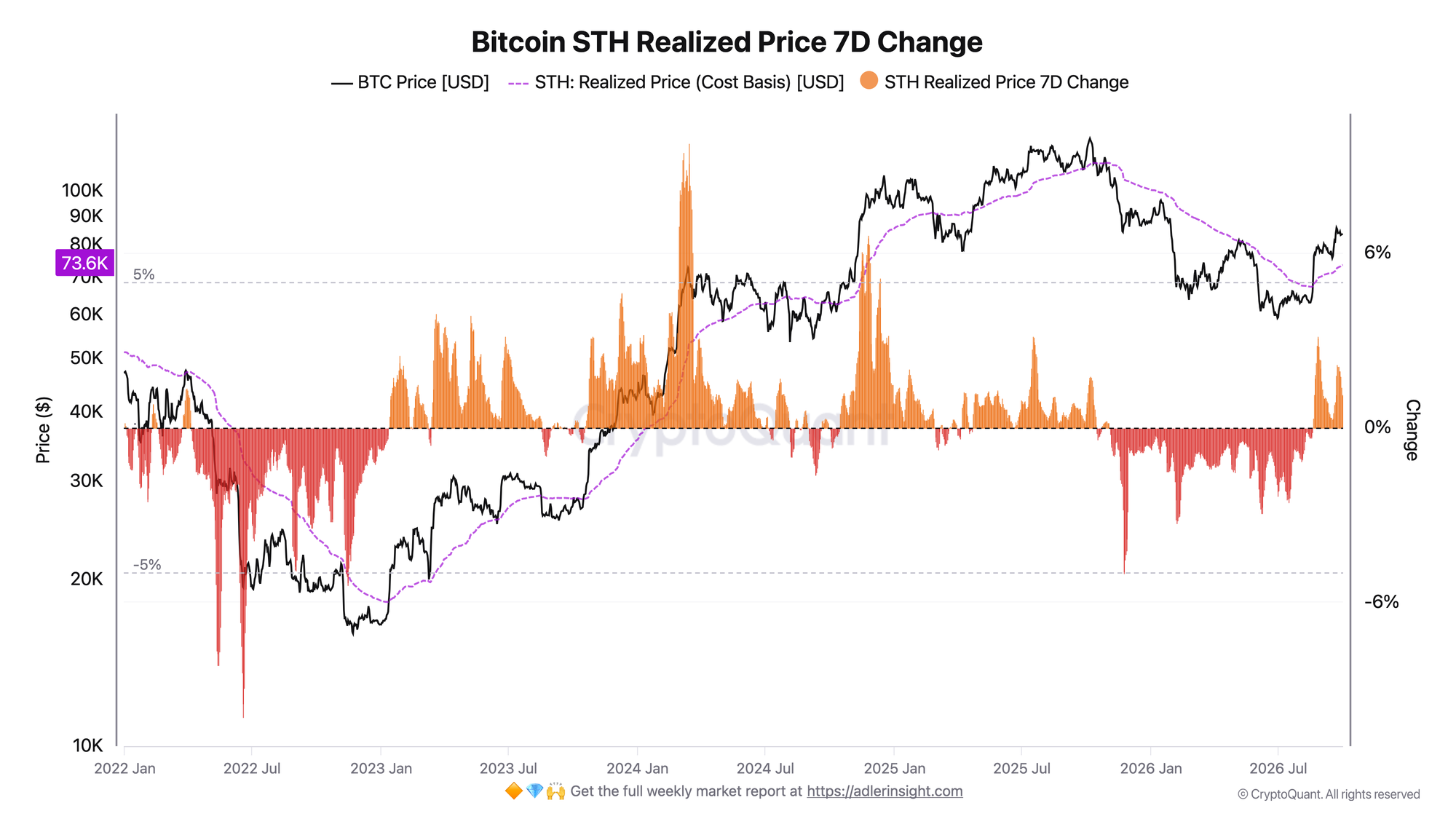
From September 24 to October 1, the short-term holder cost basis rose from $72.8K to $73.7K, while Bitcoin's price was nearly unchanged. The group retains an average unrealized profit of 13.7%, compared with 15.4% a week earlier.
The short-term holder cost basis has been rising since August 20, but Bitcoin still trades well above it. On average, the group remains in profit.
Meanwhile, cost basis growth has slowed: the weekly increase was 2.2% on September 23 and is now 1.2%. Renewed gains in Bitcoin will increase the profit cushion if its price starts rising faster than the cost basis. The current STH RP of $73.7K remains the group's average breakeven level.
Bitcoin LTH Realized Price 7D Change
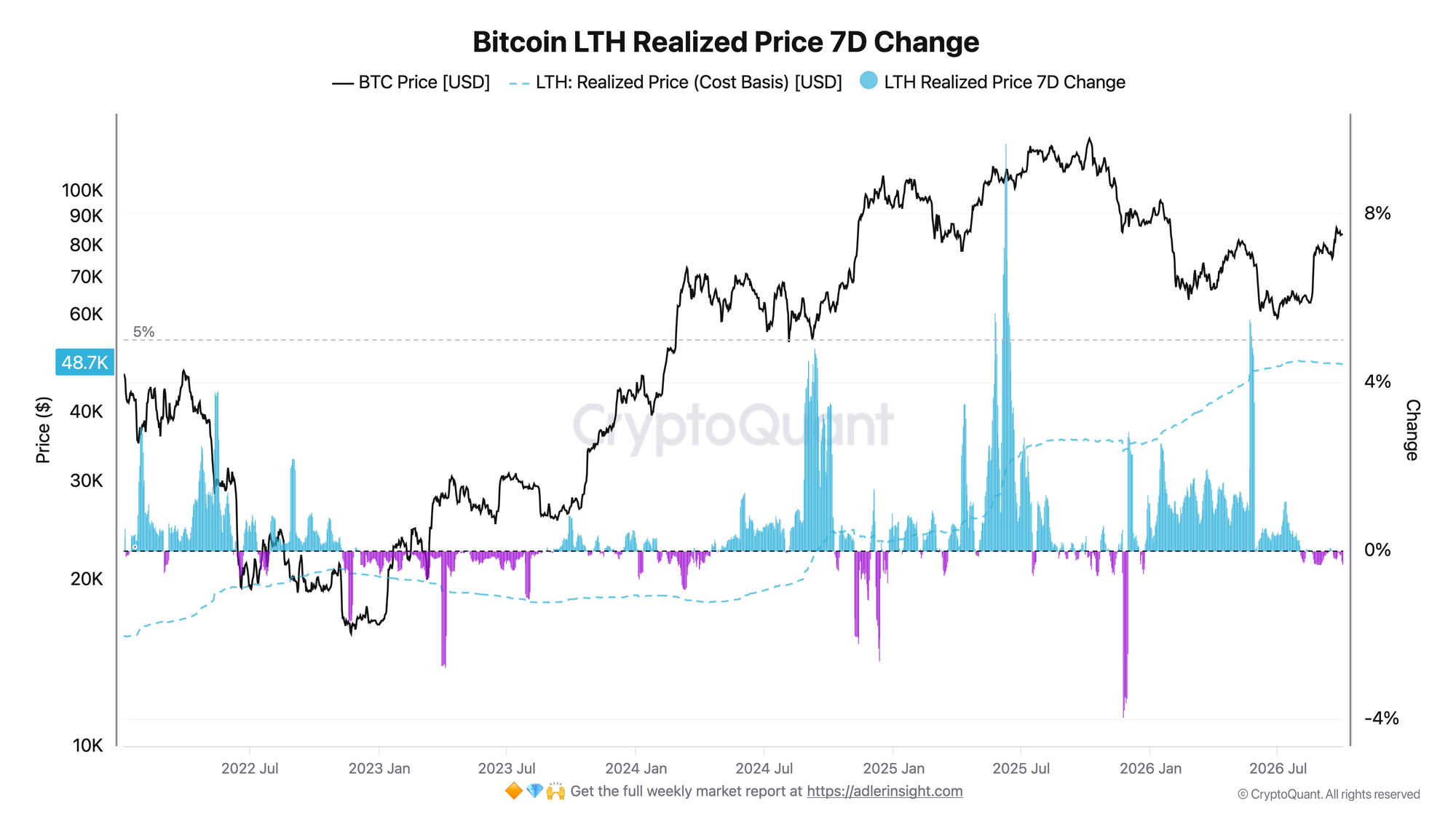
The long-term holder cost basis fell 0.3% over the past week, from $48.9K to $48.8K. This is one of the fastest weekly declines this year. Bitcoin trades 72% above that level, so the group retains a substantial unrealized profit.
Two processes affect the cost basis: coins entering the long-term holder group as they age and leaving it when they move. One possible explanation for the current decline is the movement of coins with a cost basis above the group's average.
Once moved, these coins enter the short-term holder group at the current price, which can raise its cost basis. A return of the weekly change in LTH RP to zero would mean the group's cost basis is stabilizing.
Reading the signal is not enough - you need to act on it. Weekly Engine turns on-chain data into one clear decision per week, with risk caps and invalidation built in. Subscribe.
FAQ
Does a decline in the long-term holder cost basis mean they are selling? No, not necessarily. Holders can transfer coins between their own wallets without selling, but these movements usually represent sales.
Is a rising short-term holder cost basis a bad sign? Not on its own. Bitcoin remains 13.7% above their average cost basis, so short-term holders remain in profit on average.
Conclusions
Both holder groups remain in profit: Bitcoin is 13.7% above the short-term holder cost basis and 72% above the long-term holder cost basis. Further expansion of the STH profit cushion requires price growth to outpace cost basis growth. The group's current average breakeven level is $73.7K.
Live Charts
Explore the metrics behind this brief with live, auto-updating charts:
Realized Price - Aggregate on-chain cost basis compared with BTC price and long-term trend.
LTH vs STH Supply - Supply split between long- and short-term holders to track accumulation and distribution.
STH-SOPR - Short-term holder profit/loss behavior around the 1.0 breakeven threshold.
LTH-SOPR - Long-term holder profit/loss realization around the 1.0 breakeven threshold.
Holder Behavior - All holder profitability and supply-cohort charts in one view.