


The number of coins held by long-term holders has been falling for five straight weeks, but the 30-day pace of decline has dropped from 105.9K to 21.7K BTC. Meanwhile, last week they moved coins at a small loss on average, even though bitcoin rose to $81.2K.
TL;DR
Pressure from long-term holders is easing, but their coins are still moving without a profit. We look at what this means for the market at current levels.
Bitcoin Weekly LTH Position Change
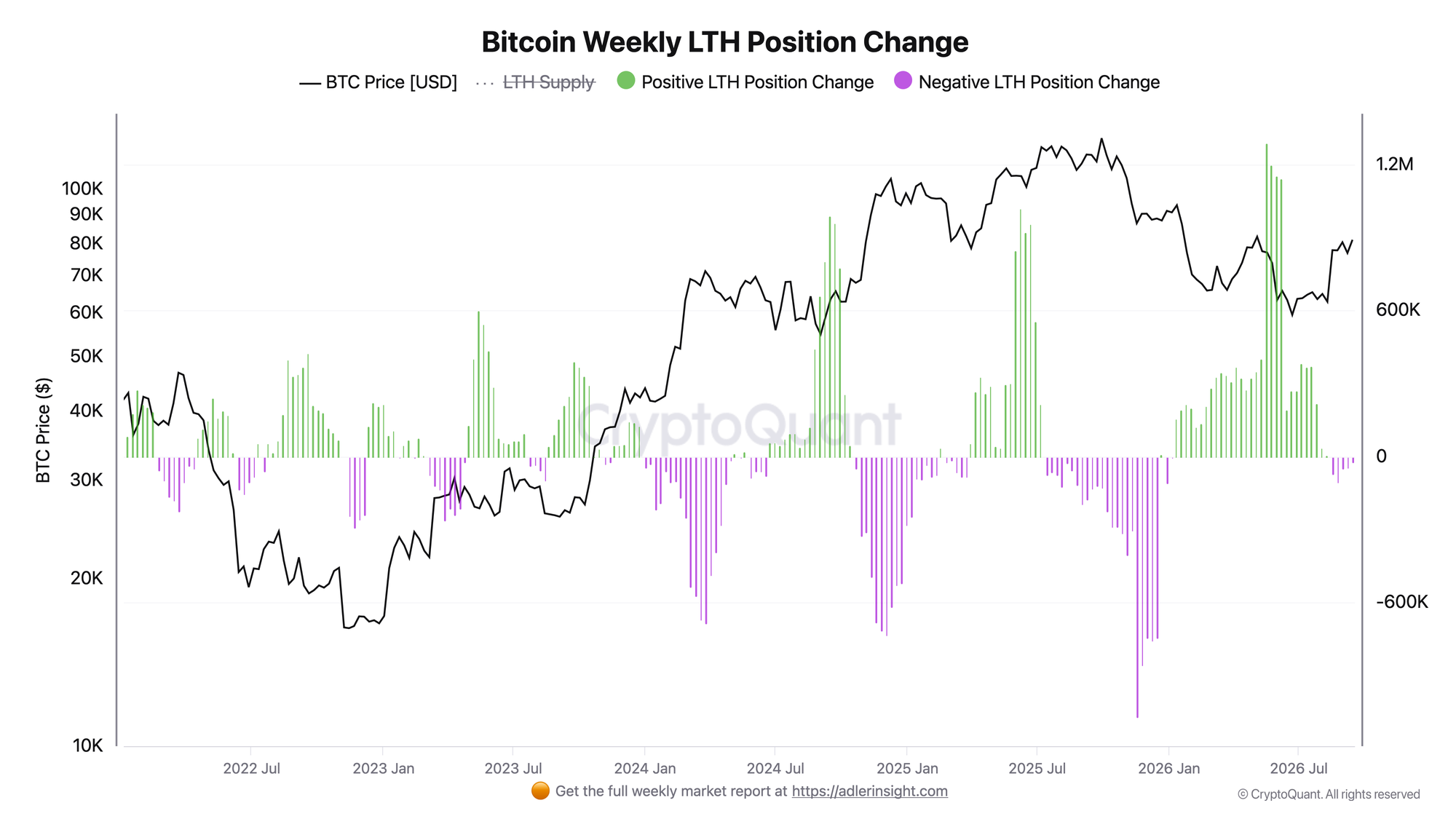
As of September 20, long-term holders held 21.7K BTC less than 30 days earlier. A week before, the decline was 47.8K BTC, and on August 30 it was 105.9K BTC. More coins are still leaving the group than joining it from buyers who have held for six months, but the gap is closing quickly.
If the metric rises above zero, the group will start growing again: more coins will be added than leave. If the decline widens back to 50-100K BTC, it will mean long-term holders are actively moving coins again.
Bitcoin Weekly LTH SOPR
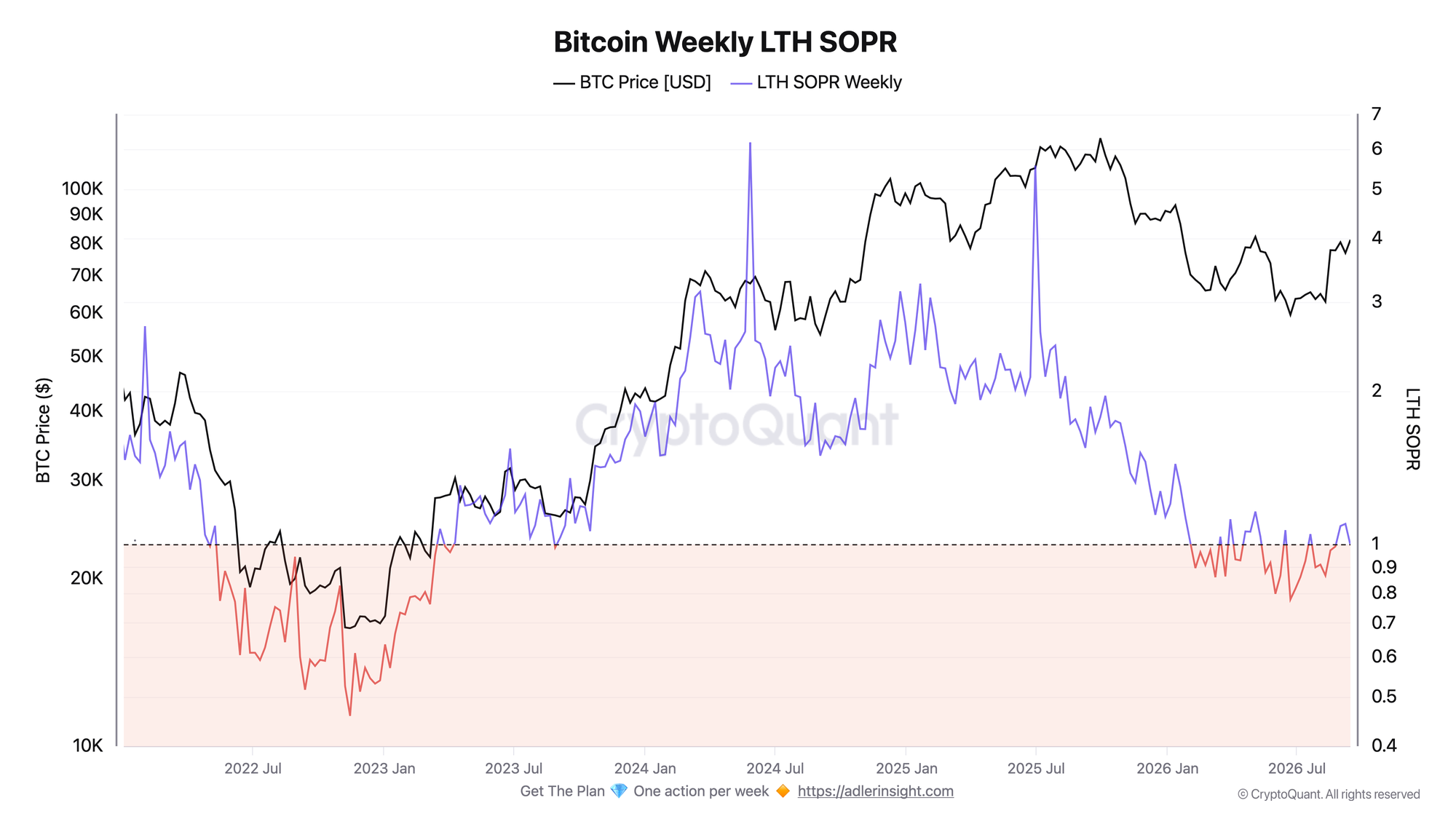
n the week to September 20, bitcoin rose 5.6%, from $76.8K to $81.2K. LTH SOPR fell from 1.096 to 0.994 over the same period. A value below 1 means long-term holders who moved coins did so, on average, slightly below their purchase price. So the coins that moved were mostly bought above current prices.
If SOPR climbs back above 1 and holds there, long-term holders will again be moving coins at a profit. If the metric stays below 1 as the price keeps rising, it will mean holders who bought higher are selling as the price approaches their purchase level. Taken together with the first chart, the picture is this: fewer coins are leaving the group, but they are being sold at a loss.
Protect capital first. Capture upside second. Built for long-term investors who want performance, not stress. Get access.
FAQ
Does a decline in long-term holder supply mean they are selling? Not exactly - the metric shows that coins in this group have started moving. That could be a sale, a transfer between wallets, or a transfer to an exchange, and the data does not distinguish between them.
Does SOPR below 1 mean all long-term holders are at a loss? No. The metric only covers coins that moved during the week. Other holders may have bought lower and remain in profit.
Conclusions
Long-term holders are still reducing their holdings, but nearly five times more slowly than at the end of August. An improvement would be the supply change moving above zero and SOPR returning above 1. The main risk is a renewed acceleration in the supply decline with SOPR below 1. That would mean holders who bought higher are once again actively selling coins at a loss.
Live Charts
Explore the metrics behind this brief with live, auto-updating charts:
LTH vs STH Supply - Supply split between long- and short-term holders to track accumulation and distribution.
LTH-SOPR - Long-term holder profit/loss realization around the 1.0 breakeven threshold.
SOPR - Spent Output Profit Ratio shows whether moved coins realize profit or loss.
Holder Behavior - All holder profitability and supply-cohort charts in one view.